





AGU August Days of Action: Scientists Stepping Up for Science – The Bridge: Connecting Science and Policy

Scientists play a vital role in serving communities by deepening our understanding of the world and driving advances that improve public health, safeguard the environment, improve safety, and more. However, recent Administration policies are putting these contributions at risk, threatening the ability of America’s scientists to carry out this critical work. Scientists are not standing…

Read More

Challenging the paradigms established by S. Dey et al. – Community of European Solar Radio Astronomers

Polarization measurements of solar radio emissions are key diagnostics of coronal plasma, magnetic fields, and propagation effects, and can provide additional constraints on emission mechanisms. At meter wavelengths, circular polarization (CP) has long been exploited in solar radio studies, while linear polarization (LP) was assumed to be absent. This view arose from the expectation that…

Read More

2006 IPCC guidelines may change national greenhouse gas inventories

Under the Paris agreement, each country must provide a reliable inventory of greenhouse gas emissions to the United Nations Framework Convention on Climate Change (UNFCCC) using guidance provided by the Intergovernmental Panel on Climate Change (IPCC). Under the Enhanced Transparency Framework, each country must apply the 2006 IPCC guidelines to complete greenhouse gas inventories. The…

Read More

A systematic review and meta-analysis of individual patient data.

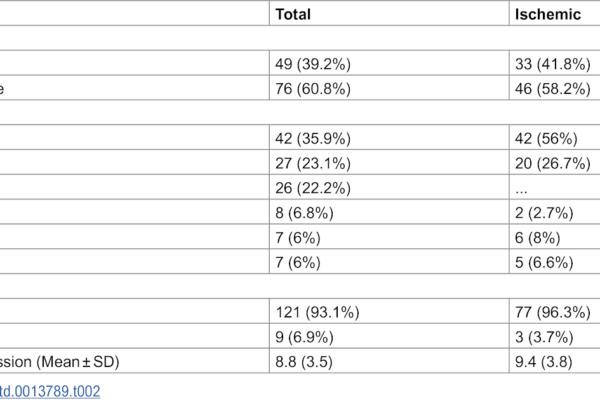
Background Snakebite envenomings (SBE) are an important and neglected health problem due to their frequency and potential for serious clinical outcomes. Envenomations can cause local and systemic complications, depending on the species of snake, the amount of venom injected, comorbidities, timing and use of antivenin, and access to medical care. Systemic effects can be fatal…

Read More