



Under the Paris agreement, each country must provide a reliable inventory of greenhouse gas emissions to the United Nations Framework Convention on Climate Change (UNFCCC) using guidance provided by the Intergovernmental Panel on Climate Change (IPCC). Under the Enhanced Transparency Framework, each country must apply the 2006 IPCC guidelines to complete greenhouse gas inventories. The transition from the 1996 to the 2006 guidelines will result in inventories reflecting quite different national greenhouse gas totals.
Professor Seungdo Kim and Dr Kaleem Anwar Mir from the Climate Change and Energy Research Center at Hallym University, Republic of Korea, together with Mr Chunkyoo Park from the Ministry of Environment, Republic of Korea, and Dr Pallav Purohit from the International Institute for Applied Systems Analysis (IIASA), Austria, explored the quantitative implications of using 2006 guidelines compared to those from 1996 in Pakistan’s greenhouse gas inventories. In the research article published in the journal Advances in climate change researchDr. Mir and his colleagues have obtained research results that will help policymakers prioritize key greenhouse gases and categories that will be targeted by Pakistan’s nationally determined contributions (NDC) for agriculture, forestry and other land uses (AFOLU) and the waste sector using the 2006 guidelines.
Dr. Kim said: “This study should be seen as a direct continuation of the previous one (Part I [Available online at: https://doi.org/10.1016/j.accre.2020.05.002]) which analyzes industrial and energy processes and product use (IPPU) in accordance with these IPCC guidelines.” Dr. Mir also added: “Our studies also provide sector-specific comparative time series analysis (1994-2017) of greenhouse gas inventories, identification of key categories and national greenhouse gas emissions trends for Pakistan.”
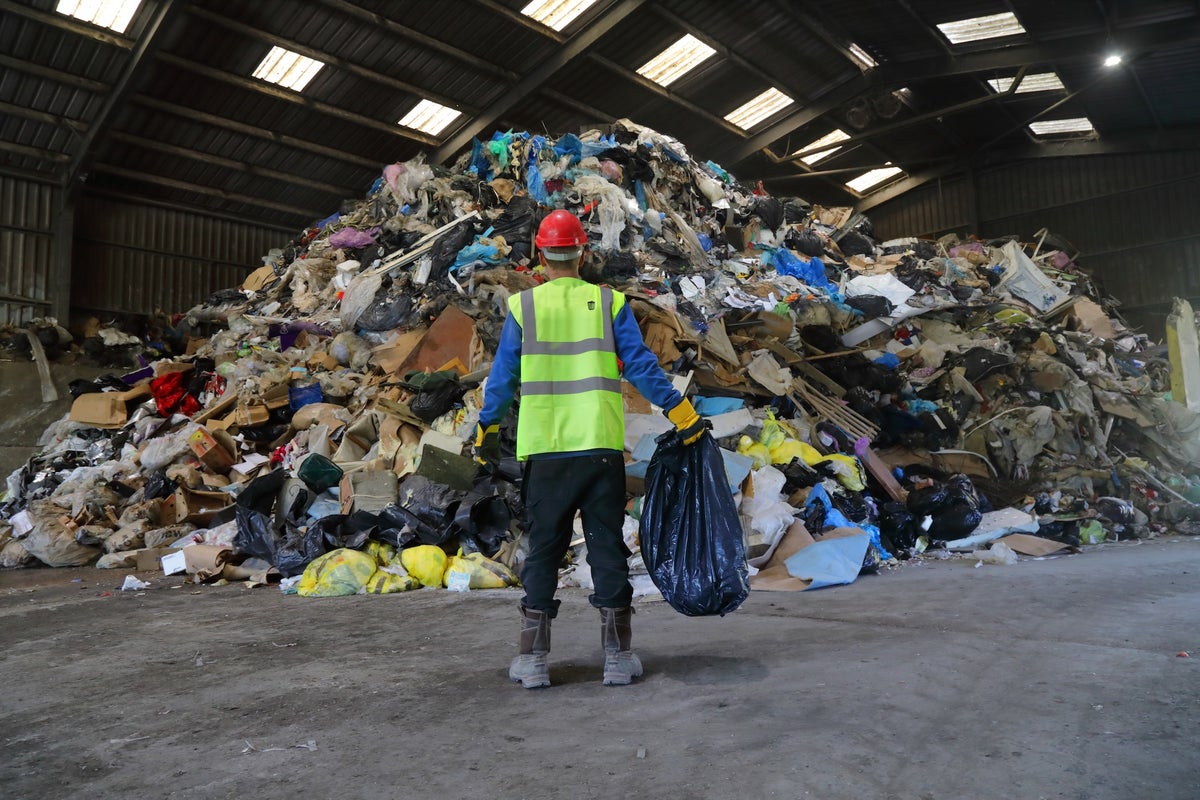
An analysis of key categories of three major greenhouse gases (carbon dioxide, nitrous oxide and methane) for 1994 and 2017 identified seventeen and fifteen key categories each year. The energy sector represented eight key categories with the most significant CO emissions.2-eq emissions for both years. Using level and trend analysis with guidelines from 1996 and 2006, Dr. Mir’s team concludes that the categories of sources that emit CO2 and C.H.4 Mitigation should be prioritized. Time series analysis from 1994 to 2017 using the 2006 guidelines shows a steady linear increase in greenhouse gas emissions from the AFOLU sector. Agriculture was responsible for more than ninety percent of emissions within the sector, with enteric fermentation being the main contributor. Overall, the average annual growth rate was positive for all categories throughout the period. The waste sector was the third largest source of greenhouse gas emissions in Pakistan in 2017. Solid waste disposal and wastewater treatment and discharge were the main sources of greenhouse gas emissions in the waste sector, with methane and nitrous oxide being the main greenhouse gases emitted.
Comparative analysis of greenhouse gas inventories using the 2006 and 1996 guidelines identified that the total national greenhouse gas emission under the latest guidelines from all source sectors was significantly reduced compared to previous estimates based on one. According to the most recent guidelines, carbon dioxide has a higher proportion than previous ones. In contrast, nitrous oxide was reduced compared to before and methane allocation remained similar in both guidelines. Overall, the 2006 guidelines tend to improve the overall accuracy of emissions estimates relative to the 1996 guidelines. For the AFOLU sector, methane emissions estimates under the latest guidelines are higher. The AFOLU subsector-based emissions estimates were very different from each other due to the updated default emission factors for the various subsector parameters. In the waste sector, the trend based on the 2006 guidelines shows constant emission, while the trend based on the 1996 guidelines shows deviations for different years, which could be due to the refinement of the methods and the improvement of the predetermined emission factors in the latter.
This study has used the 2006 guidelines to develop greenhouse gas inventories, construct a consistent time series of annual estimates, and perform key category analyzes for Pakistan. Dr. Mir concluded to Science Feature that, based on the results of this study, the 1996 guidelines overestimated national greenhouse gas emissions compared to the 2006 guidelines, due to updated methods and revised default emission factor values, further affecting base year emissions and lowering the NDC target. Following this guideline will help Pakistan develop strategies and achieve long-term low greenhouse gas emissions in a more transparent manner under the Paris agreement.
Magazine reference:
Mir, Kaleem Anwar, Chunkyoo Park, Pallav Purohit and Seungdo Kim. “Comparative analysis of greenhouse gas emissions inventory for Pakistan: Part II agriculture, forestry and other land uses and wastes.” Advances in Climate Change Research 12, no. 1 (2021): 132-144. https://doi.org/10.1016/j.accre.2021.01.003
Main image credit: PXFuel
About the authors

Dr. Seungdo Kim, Ph.D.
Teacher
Dr. Seungdo Kim has been a professor in the Department of Environmental Sciences and Biotechnology, Hallym University, South Korea, since 1997. He received his BSc in Oceanography from Seoul National University, his MSc in Environmental Engineering from the University of Illinois, and his Ph.D. in Environmental Engineering from the University of Wisconsin. He is an expert in greenhouse gas inventory. His field of research is the development of greenhouse gas emission factors specific to each country and each plant. Currently, he is interested in developing catalytic pyrolysis processes to destroy fluorinated greenhouse gases such as HFCs, PFCs and SF6. He was one of the lead authors in the waste sector for the 2019 Refinement of the 2006 IPCC guidelines for national greenhouse gas inventories. He has served as lead reviewer of national GHG inventory reports submitted by developed countries to the UNFCCC since 2004. He was a member of the editorial board of the IPCC GHG emission factors database from 2009 to 2013.

Kaleem Anwar Mir, M.S.
PhD. Candidate
Kaleem Anwar Mir is a Ph.D. candidate at Hallym University, South Korea at the Climate Change and Energy Research Center, led by Dr. Seungdo Kim. He also holds the position of Scientific Officer at Center for Global Change Impact Studies, Ministry of Climate Change, Government of Pakistan. He has served as an expert reviewer of national GHG inventory reports submitted by developed countries to the UNFCCC since 2012. He is a chapter scientist for the upcoming sixth assessment report of IPCC WGIII (Mitigation). He received his BSc in Chemical Engineering from the University of Punjab, Pakistan, and his MSc in Environmental Management from the National University of Singapore, where he conducted research on air quality improvement and greenhouse gas mitigation in Pakistan. His current research involves the analysis of integrated air pollution control models and greenhouse gas reduction strategies in Pakistan through the application of advanced downstream emission control technologies and sustainable development measures.

Pallav Purohit, Ph.D..
Dr. Pallav Purohit received his Ph.D. Graduate in Energy Policy and Planning from IIT Delhi. He is currently a senior researcher at the International Institute for Applied Systems Analysis (IIASA), Austria. Before joining IIASA, Dr. Purohit worked as an e8 Postdoctoral Research Fellow at the Hamburg Institute of International Economics (HWWI), Germany. He was also a visiting faculty member of the Department of Energy and Built Environmental Technology, Linnaeus University, Sweden; Institute of Political Science, University of Zurich, Switzerland; Visiting member of the School of International Development at the University of East Anglia (United Kingdom) and the Council on Energy, Environment and Water (CEEW) in New Delhi. He is an associate editor of the International Journal of Global Energy Issues (IJGEI) and a member of the editorial board of Sustainability, Innovative Energy Policies and the Journal of Renewable Energy. His research interests include Science; technology and policies focused on energy and environmental issues in developing countries; energy economy; climate change; Control of air pollution and human health.
#IPCC #guidelines #change #national #greenhouse #gas #inventories