





This ancient crocodile never finished its last meal. More than 2,000 years after his death, researchers can still make out a small fish inside his stomach: his body intact, still caught on a bronze hook. That detail, discovered through modern images, offers the clearest clue yet as to how this reptile met its end.
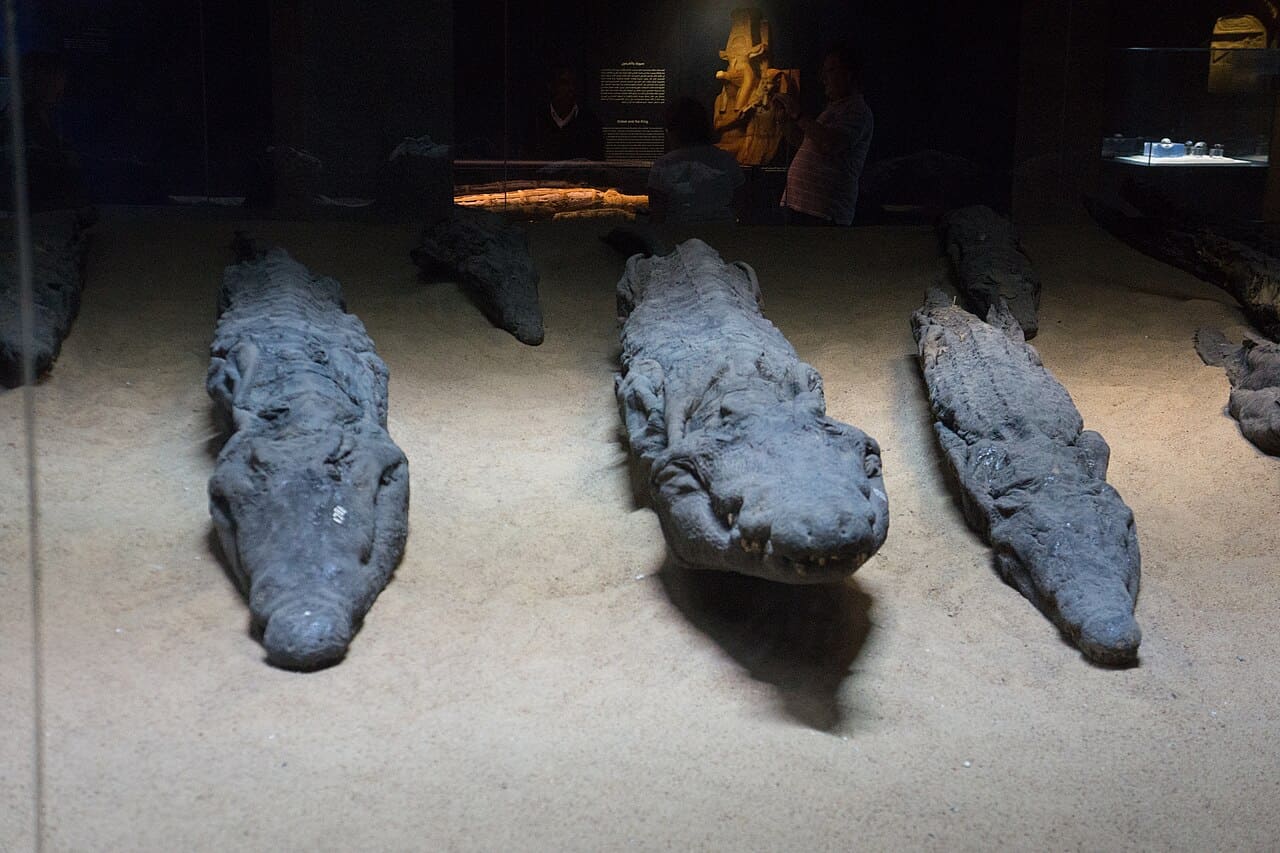
The 2.2 meter crocodile, now kept at the Birmingham Museum and Art Gallery and listed as 2005.335has become an unlikely source of information. New scanning techniques have revealed what it ate, how it was captured by ancient Egyptians and details about its eventual mummification.
A killer in trouble
When researchers at the University of Manchester put the mummy into a CT scanner, they expected to see the usual: bones, soft tissue, maybe some gastroliths (the stones that crocodiles swallow to help digest their meals). Instead, they saw something extraordinary: the aforementioned hookfish.
The scan suggested a tight chain of events. The gastroliths found higher up in the digestive tract had not yet reached the stomach. The fish’s skeleton was pristine, so the crocodile had died before digestion began. This moment pointed to a deliberate capture.
The ancient Egyptians used to hunt crocodiles to sacrifice them. sobekthe crocodile god associated with fertility and the Nile, which gives life. In this case, scientists believe the animal swallowed the baited fish, was dragged away shortly afterward, and almost immediately prepared for mummification.
The technique aligns with historical accounts. Herodotus described hooks baited with pork to attract crocodiles. Later classical authors mentioned nets and spears. But the hook found in 2005.335 is physical evidence of a strategy once considered largely anecdotal.
“While previous studies favored invasive techniques such as unwrapping and autopsy, 3D radiography provides the ability to see inside without damaging these important and fascinating artifacts,” said the lead author. Dr. Lidija McKnight from the University of Manchester.
What a crocodile mummy can teach us
Animal mummification in ancient Egypt was more than a ceremonial spectacle. It was almost an industry. Tens of thousands of crocodiles were preserved for temples and votive offerings. Some were bred in captivity; others were trapped in the wild when necessary. Archaeological finds, from breeding sites in Fayoum to tombs that housed crocodiles up to six meters long, show how close the ancient Egyptians lived to this river predator.
Crocodiles symbolized danger and death (obviously), but also protection and regeneration. Their presence promised healthy floods and fertile fields. The Egyptians admired their strength, feared their speed, and honored them in life and death.
The recent study, published in Digital applications in archeology and cultural heritagedrives that understanding even further. The non-invasive X-ray revealed remarkably preserved tissues: skin, muscles and even the trachea. Crocodile stomach stones reveal that the crocodile is still actively feeding and regulating buoyancy. Their preserved organs show that embalmers left the internal anatomy intact, a practice that contrasts with the removal of viscera in human mummification.

“We took the process a step further by replicating the fish hook in its original material, bronze,” Dr. McKnight said. “Despite the passage of several millennia between the production of the ancient hook and the modern replica, the casting process remains remarkably similar.”
The research team first produced a plastic model based on CT scan data and then cast it in bronze, reflecting, as closely as possible, the methods ancient metallurgists used, including hardening clay, molten metal and charcoal fire.
Why is this discovery important?
Around the world, new imaging technologies have transformed the way archaeologists investigate the past. Radiography allows researchers to protect fragile remains while uncovering details previously only accessible through destructive dissection. CT scans now reveal embalming resins inside human mummies; digital modeling reconstructs the faces of ancient rulers; 3D printing revives lost tools and ornaments.
For animal mummies like 2005.335, the implications show how humans interacted with dangerous wildlife, worshiped it, manipulated it, and ultimately incorporated it into their ritual lives.
Dr. McKnight summed up that broader mission: “Our work revealed a wealth of information, both about the life of the crocodile and the post-mortem treatment of its remains… Our work provides a unique opportunity to connect visitors with the history of this animal.”


#Ancient #scan #reveals #meal #killed #Egyptian #crocodile